

Introduction
There’s a hard truth we keep seeing: teams are shipping more code than ever, while understanding less of it.
“Vibe coding” is the name people are giving to that shift, an AI-first way of building where you describe intent, the model generates the implementation, and you steer by output rather than by code comprehension. The term was popularized by Andrej Karpathy and amplified into the mainstream as a shorthand for “let the model handle the details.”
This article is not a panic button. It’s a pragmatic framing: vibe coding can be useful, but it changes what “good engineering” means operationally, especially around security, maintainability, and accountability.
What “Vibe Coding” Really Means in Practice
At a high level, vibe coding is:
- You operate primarily in natural language prompts
- You accept large chunks of generated code
- You iterate by “does it work?” rather than “is it correct and designed well?”
- You often can’t explain the implementation end-to-end without re-deriving it
That’s not automatically bad. But it’s materially different from “using AI as an assistant” (autocomplete, refactors, test scaffolding), where the engineer remains the author and reviewer.
The important detail: vibe coding is not a tool — it’s a workflow choice. And workflows have consequences.
Where Vibe Coding Actually Works
Prototyping and product discovery
For early-stage exploration, vibe coding is legitimate leverage:
- Internal demos
- Spike solutions
- Throwaway prototypes to validate UX or feasibility
- Simple automations and internal tooling
In these contexts, speed matters more than long-lived correctness. The system’s value is learning, not endurance.
Narrow-scope utilities
When the blast radius is small, vibe coding can be a productivity boost:
- One-off scripts
- Data formatting tools
- Non-critical dashboards
- “Glue code” around stable APIs (still with review)
This is where many teams will feel real ROI, because the maintenance expectations are low.
Where Vibe Coding Breaks Down (and Gets Expensive)
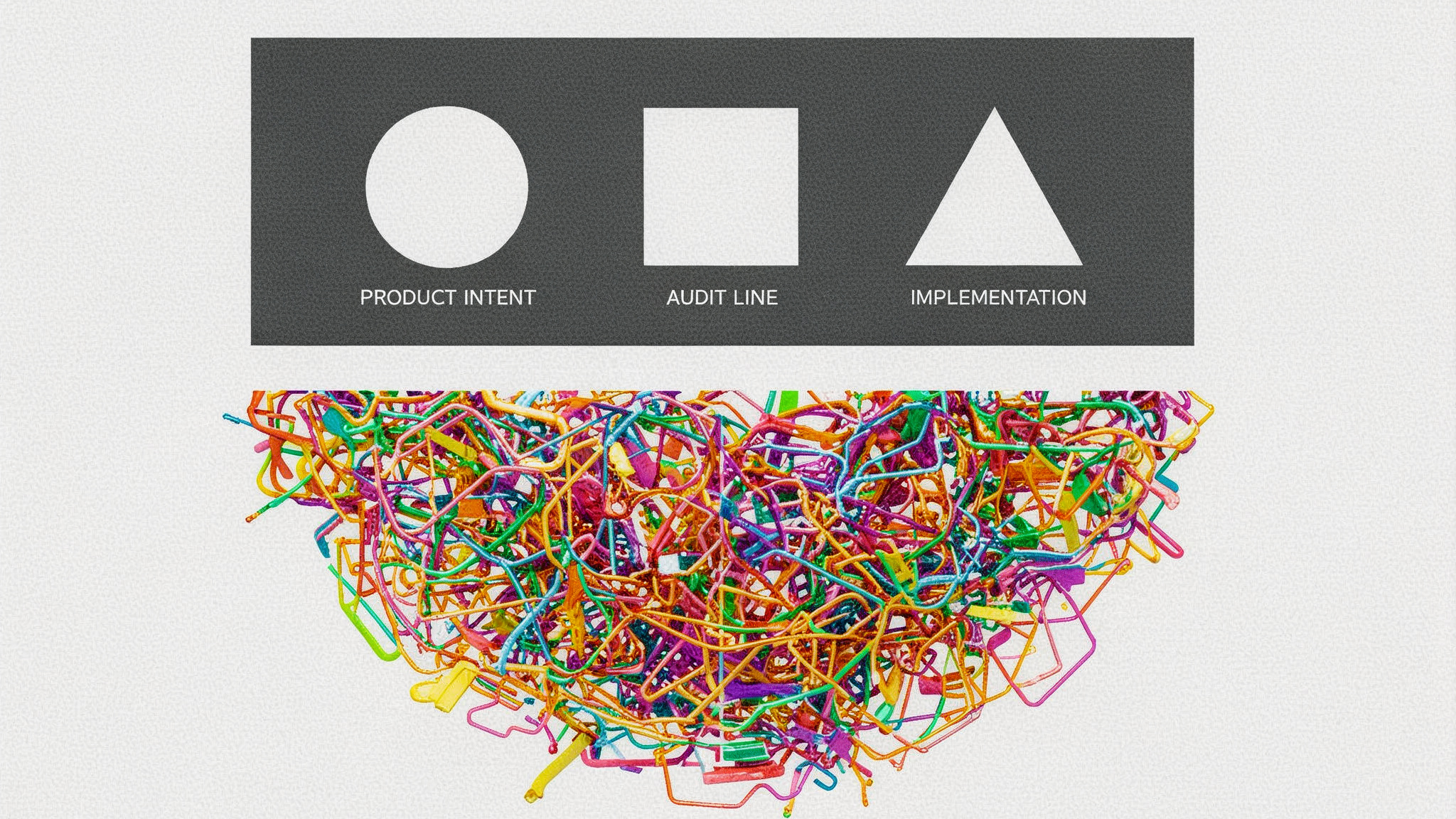
Maintainability: you didn’t remove complexity — you deferred it
Generated code tends to be:
- Verbose
- Inconsistent in patterns
- Overfit to the prompt, underfit to the architecture
- Weak on “why” (design intent rarely gets captured)
That’s survivable in a prototype. In a product, it becomes friction: onboarding slows, refactors get risky, and changes become negotiation with the codebase.
Security: “working” is not the bar
Public commentary around vibe coding has repeatedly emphasized the security risk: fast generation can normalize skipping threat modeling, dependency hygiene, and review discipline.
The problem isn’t that AI writes “bad code” every time. The problem is that it can write plausible code that passes basic tests while embedding:
- Unsafe defaults
- Weak validation
- Over-permissive access patterns
- Dependency landmines
Once that’s in production, the cost isn’t technical; it’s business: incidents, customer trust, audits, and remediation cycles.
Team skill distribution: you can accidentally deskill your org
A common pattern we see: senior engineers move faster, juniors lose the learning path.
If “the model did it” becomes the default, teams stop building the muscle for:
- Debugging from first principles
- Reading unfamiliar code deeply
- Understanding failure modes
- Owning design trade-offs
That doesn’t show up in sprint velocity this month. It shows up when the system breaks in a way the model can’t “prompt away”.
How We’d Operationalize Vibe Coding Without Losing Control

1) Define allowed zones
Create explicit categories:
- Green zone: prototypes, internal tools, low-risk utilities
- Yellow zone: product code, but only with review + tests + architecture alignment
- Red zone: auth, payments, permissions, cryptography, infra, compliance surfaces
If everything is “yellow”, people will treat it as green.
2) Treat prompts as engineering artifacts
If the model is “coding”, then prompts are requirements:
- Store them (PR description, ticket, or doc)
- Capture constraints (performance, security, invariants)
- Make them reviewable
This is how you keep intent tied to implementation.
3) Add mandatory automated gates
At minimum:
- Tests (including negative cases)
- Static analysis / linters
- Dependency scanning
- Secret detection
- SAST where applicable
The point is to make “it runs” insufficient.
4) Force architectural alignment
We’d rather ship 30% less code than ship a product that can’t evolve.
Concrete tactics:
- Provide project-specific templates and patterns
- Enforce module boundaries
- Require design notes for new subsystems
- Reject “new style introduced by the model” unless it’s intentional
The Senior Insight: This Isn’t About Coding. It’s About Accountability.
Vibe coding changes the accountability model:
- Who understands the system?
- Who can debug it under pressure?
- Who can safely change it six months later?
- Who can defend it in a security review?
If you can’t answer those questions confidently, vibe coding isn’t speeding you up, it’s borrowing time from the future.
And the interest around vibe coding in 2025 reflects exactly that tension: it’s simultaneously empowering and destabilizing depending on how it’s governed.
Conclusion
Vibe coding is real, and it’s not going away. But it’s not a free productivity upgrade.
Used well, it accelerates discovery and removes busywork. Used carelessly, it quietly increases your operational risk while making the codebase harder to own.
The teams who win with AI-assisted development won’t be the ones who generate the most code. They’ll be the ones who keep authorship, intent, and quality controls intact while letting models do the mechanical parts.
Final thoughts
Where would vibe coding sit in your org today: green zone, yellow zone, or red zone?
If you’re navigating this complexity, let’s discuss how to stabilize your architecture, so you can move fast without losing control.